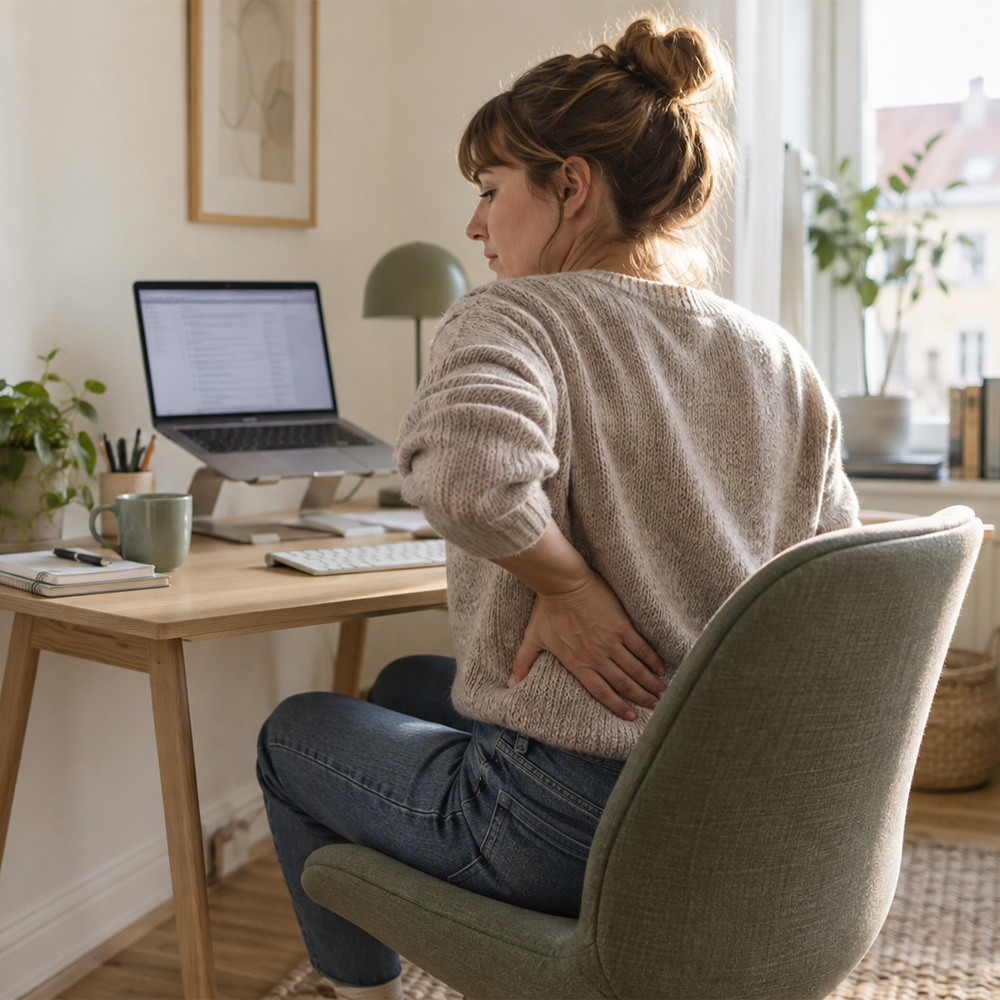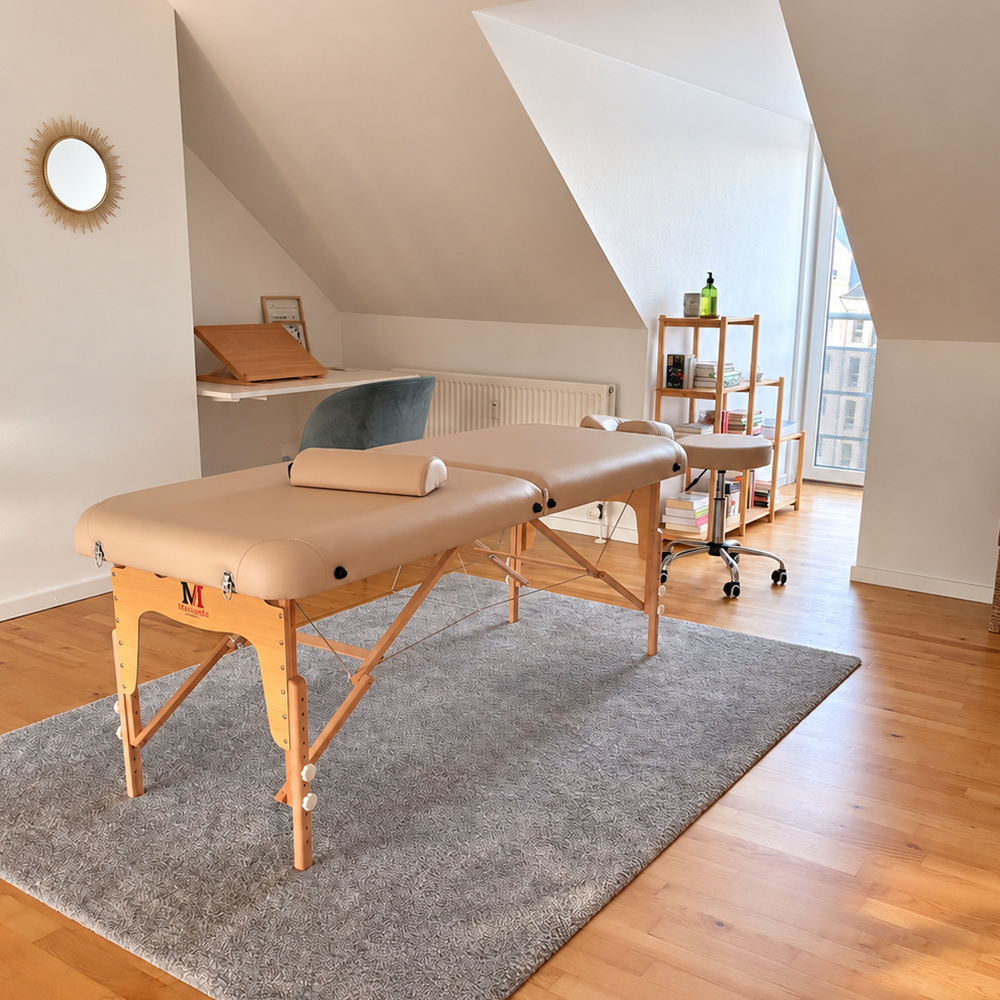




Yes, a tight psoas is often part of lower back pain. It connects the spine to the legs, and when we sit a lot it stays short and pulls on the lower back.
Does your lower back ache when you get up from your chair? Does it feel stiff in the morning, or tired after a long day of sitting, a long ride or a swim?
When people point at their lower back, I very often find part of the story deeper, in the psoas.
Lower back pain with a tight psoas usually comes from long hours of sitting, a core that is not doing its share, repeated movements in sport or work, and stress.
Things I often see behind lower back pain:
I often ask a simple question: where are you putting your strength? When people start to notice that, the work on the table connects to real life.
Yes, massage can help a lot with everyday muscular lower back pain, especially together with some movement and core strength at home.
It can ease tension, improve circulation and help you move with less stiffness.
Please see a doctor first if the pain spreads down the leg with numbness or weakness, if you have trouble controlling bladder or bowel, if the pain came after a fall, or if it comes with fever or weight loss you can't explain. Please see a doctor first if the pain came after a fall or accident, if it is sharp, sudden or getting worse quickly, or if you notice numbness, weakness, fever or anything that simply feels wrong. I am happy to support you, and I will always tell you honestly when massage is not the first thing you need.
I release a tight psoas slowly and carefully, because it lies deep in the belly, and I work on the lower back, glutes and breathing around it.
We talk first about your days, your training and when the pain shows up.
Then I work with deep tissue and Zen Shiatsu, with grounded pressure and lots of detail.
The areas I usually focus on:
[Client story from Vica needed]
The kindest things for a sore lower back at home are standing up often, a gentle hip flexor stretch, slow belly breathing and a daily walk.
For lower back pain, a steady rhythm works best: once a week for 45 minute sessions, or every two weeks for 60 minute sessions.
Every body is different, so I can't promise a number, but I see again and again that a rhythm like this works better than a single session.
When you come once a month, the body has often forgotten the last session and the tension has more room to come back.
Many people start with a short series and then space the sessions out as they feel better. If you know you will come regularly, my loyalty tickets let you save on every visit and book whenever it suits you.
It can feel intense because the muscle is deep. I go slowly and check in with you all the time. It should never feel sharp.
For most everyday back pain, gentle movement helps more than lying still. If the pain is very strong or came after an injury, see a doctor first.
It cannot fix a disc. If you have a diagnosed disc problem, follow your doctor or physio. I can sometimes help with the muscle tension around it, but only with their okay.
Common signs are a lower back that aches when you stand up from a chair and hips that feel stiff after sitting. A physio can assess it properly.